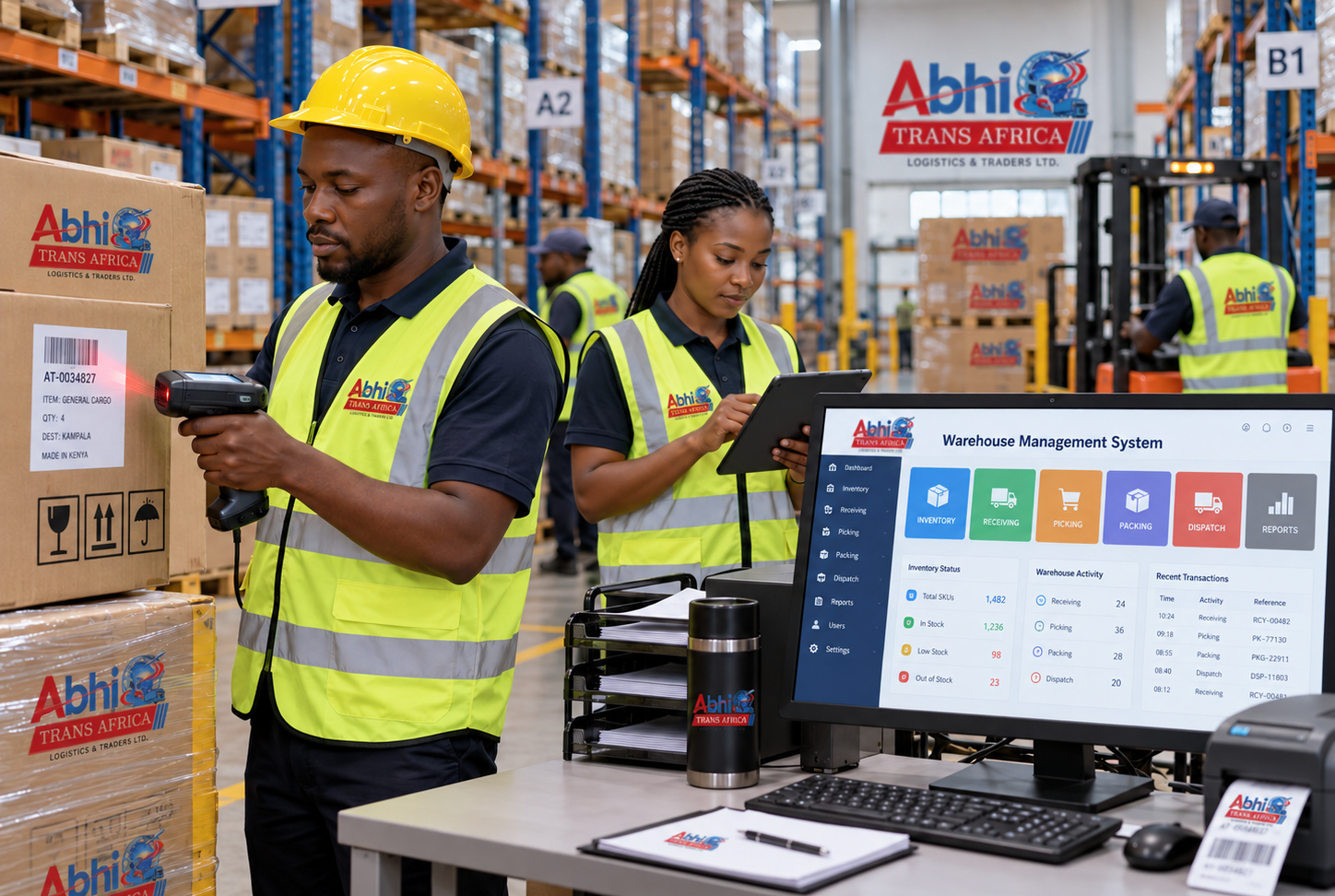
As a trusted name among warehousing operations in Africa, Abhi TransAfrica Logistics and Traders Ltd’ Warehouse Management System (WMS) helps businesses efficiently control and administer warehouse operations from the time goods or materials enter until they move out. Operations in a warehouse include inventory management, picking processes, and auditing.
WMS provides visibility into an organization's inventory at any time and location, whether in a facility or distributor. It can also manage supply chain operations from the manufacturer or wholesaler to the warehouse, then to a retailer or distributor.
Abhi TransAfrica Logistics and Traders Ltd’ WMS is often used alongside or integrated with a Transportation Management System (TMS) and Inventory Management System to deliver end-to-end control and visibility across the supply chain.
Benefits of Technology-Enabled Warehouse Management
Technology-supported warehouse management can help businesses improve inventory accuracy, streamline material movement, support faster decision-making and strengthen coordination between warehousing and distribution activities.
Timely operational information can support better visibility into warehouse activity, inventory movement and distribution planning.
Integration
Warehouse information can be coordinated with wider logistics and business processes to improve communication between inventory, transportation, distribution and customer operations.
Expertise
ATLT’s warehousing and distribution capability is supported by an experienced workforce and technology-enabled operational processes across a growing logistics network.
Transparency
Clear operational records and inventory visibility help improve transparency across warehouse and supply chain activities.
Efficiency
Technology-supported workflows can help reduce repetitive manual tasks and improve coordination across receiving, storage, picking, dispatch and reporting.
Traceability
Structured inventory records and warehouse reporting can improve visibility of goods as they move through storage and distribution stages.
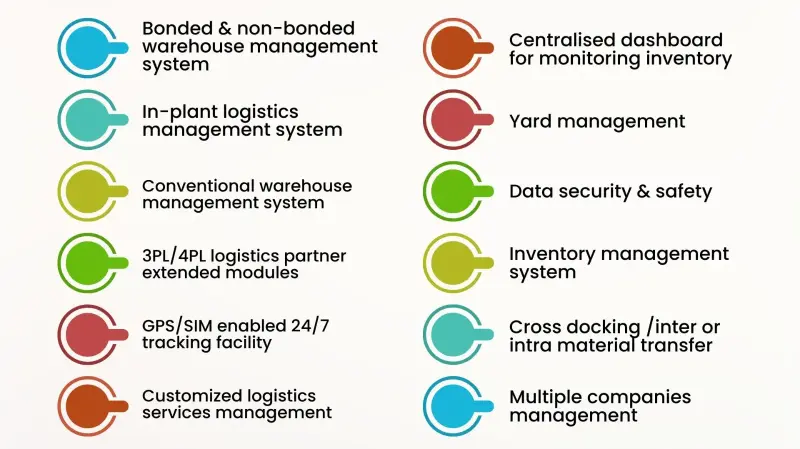
Key Warehouse Management Features
Warehouse Design
Warehouse design enables organizations to customize workflow and picking logic to
make sure that the warehouse is designed for optimized inventory allocation. The WMS
establishes bin slotting that maximizes storage space and accounts for variances in
seasonal inventory.
Inventory Tracking
Inventory Tracking enables the use of advanced tracking systems, including
Radio-Frequency Identification (RFID), Automatic Identification and Data Capture
(AIDC) and barcode scanners to make sure that goods can be found easily when they
need to move.
Dispatch
Dispatching enables the WMS to send bills-of-lading (B/L) ahead of the shipment,
generate packing lists and invoices for the shipment and send advance shipment
notifications to recipients.
Labour management
Labour Management helps warehouse managers monitor workers' performance by using key
performance indicators (KPIs) that indicate workers who perform above or below
standards.
Receiving and put-away
Receiving and put-away allows inventory put-away and retrieval, often with
pick-to-light or pick-to-voice technology to help warehouse workers locate goods.
Yard and dock management
Yard and dock management assist truck drivers coming into a warehouse to find the
right loading docks. A more complex use of yard and dock management enables
cross-docking.
Picking and packing goods
Packing goods including zone picking, wave picking and batch picking. Warehouse
workers can also use lot zoning and task interleaving functions to guide the
pick-and-pack tasks most efficiently.
Reporting
Reporting is crucial for warehousing operations in Africa, as it helps managers analyze
warehouse performance and identify areas for improvement to optimize efficiency and
cost-effectiveness.
Warehouse Operations Across East Africa
ATLT’s strategic presence across Nairobi, Mombasa, Nakuru, Kisumu and Eldoret in Kenya; Dar es Salaam in Tanzania; Kampala in Uganda; Kigali in Rwanda; and Addis Ababa in Ethiopia supports warehousing, distribution and supply chain operations across the East African region.
ATLT also handles more than 10 million sq. ft. of warehousing capacity and connects 125 countries through its freight network, supporting regional and international supply chain requirements.