Logistics & Supply Chain Consultancy

Abhi TransAfrica Logistics and Traders Ltd (ATLT) supports businesses with logistics and supply chain consultancy backed by operational experience, regional knowledge and global connectivity.

Logistics & Supply Chain Consultancy

Logistics & Supply Chain Consultancy is part of ATLT’s end-to-end logistics offering. Our broader operational capabilities span 3PL & Supply Chain Management, Warehousing & Distribution, In-Plant Logistics, Road, Rail & Coastal Transportation, International Freight Forwarding, Customs Clearance, Project & Reverse Logistics.

Headquartered in Nairobi, Kenya, ATLT combines local market understanding with the wider capabilities of the ABHI Group of Companies. Our strategic presence across key East African markets enables us to understand the operational realities businesses face while moving goods across domestic, regional and international supply chains.

A logistics consultancy engagement helps businesses examine how their supply chain is structured, identify operational gaps and evaluate opportunities to improve coordination, visibility, responsiveness and resource utilization.

ATLT brings practical logistics experience across diverse industries including Agriculture, Steel, Textiles, Food Processing, FMCG, FMCD, Plastics, Paper, Engineering, Machinery, Automotive & Auto Components, Infrastructure, Metals, Pharmaceuticals, Healthcare, Paints & Chemicals and Retail.
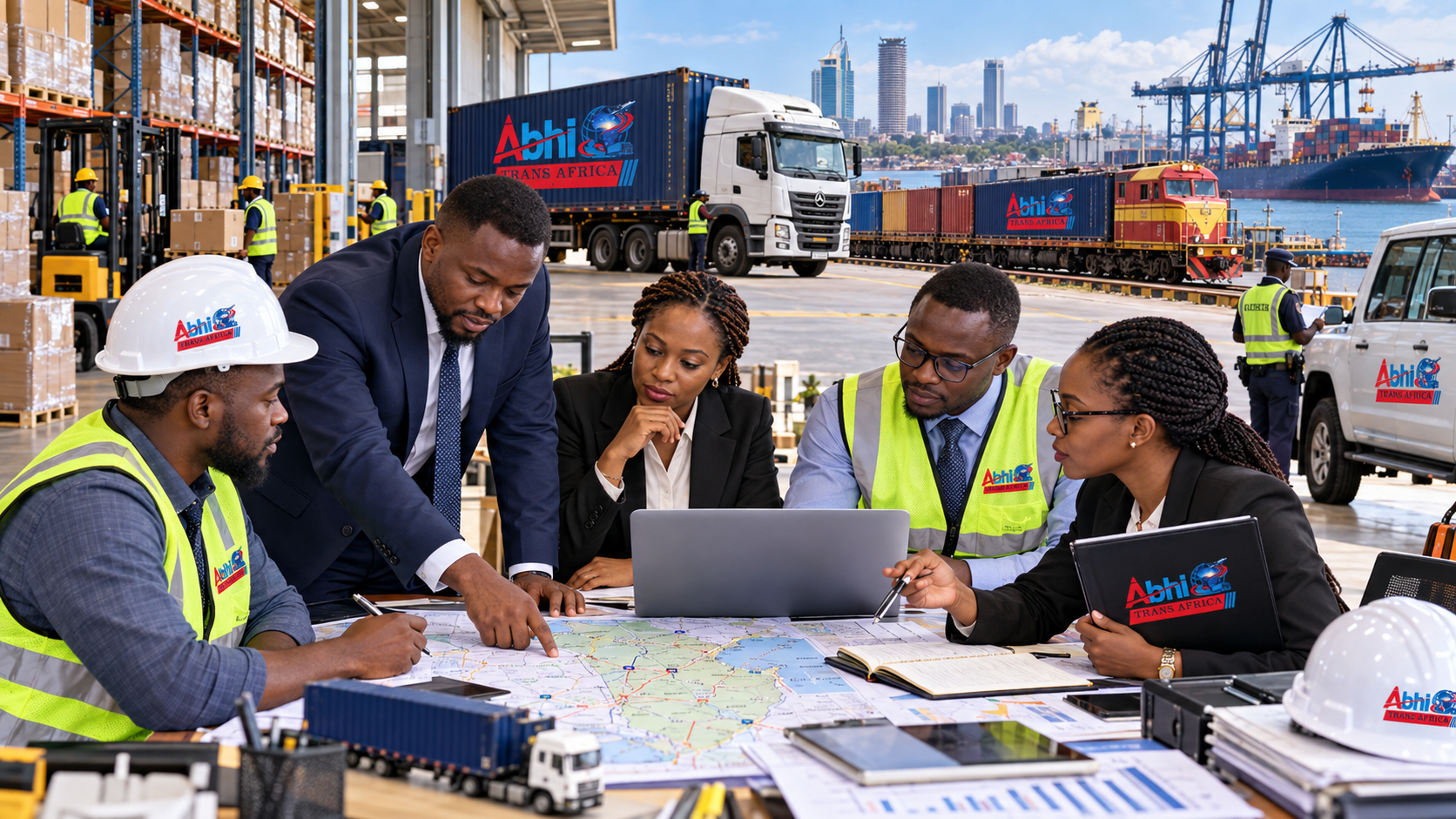
Logistics and supply chain consultancy infographic for African businesses

Understanding Logistics Consultancy

Logistics consultancy focuses on reviewing how goods, information and resources move across a supply chain. It can help organizations better understand the relationship between transportation, warehousing, inventory, distribution, freight, customs processes and overall supply chain coordination.

For businesses operating across multiple locations or entering new markets, a structured logistics review can provide greater clarity around existing processes, operational dependencies and areas where better integration may be required.

The objective is to support informed decision-making by connecting business requirements with practical logistics considerations and the realities of the markets in which the organization operates.

Key Areas of Logistics Consultancy

Supply Chain Assessment

Current-State Review: Understanding existing logistics processes, operating requirements and supply chain dependencies.

Operational Gaps: Identifying areas where coordination, visibility or process alignment may require improvement.

Warehousing & Distribution Planning

Flow of Goods: Reviewing how products move through storage and distribution operations.

Operational Alignment: Evaluating how warehousing and distribution can better support business requirements and customer demand.

Transportation & Network Review

Network Considerations: Examining transportation requirements across road, rail, coastal and international freight movements.

Regional Connectivity: Considering how logistics networks can support movement across East African and international markets.

Import-Export & Customs Processes

Process Understanding: Reviewing the logistics requirements surrounding import-export movements and customs clearance.

Coordination: Supporting better alignment between freight, documentation, customs processes and downstream logistics activities.

Operational Efficiency

Process Review: Evaluating workflows and logistics interfaces that influence responsiveness and execution.

Resource Utilization: Identifying opportunities to use logistics infrastructure, people and processes more effectively.

Technology & Visibility

Information Flow: Assessing where greater visibility and timely information can support logistics decision-making.

Connected Operations: Considering how technology-enabled processes can support coordination across different logistics activities.

Frequently Asked Questions

Logistics and supply chain consultancy involves reviewing logistics processes, networks and operational requirements to help organizations understand gaps, improve coordination and make more informed supply chain decisions.

Yes. Logistics & Supply Chain Consultancy is included within ATLT’s end-to-end logistics and supply chain service portfolio.

A review can consider supply chain structure, warehousing, distribution, transportation, freight movement, import-export processes, customs coordination, operational workflows and information visibility.

It can help businesses evaluate logistics requirements, regional connectivity, warehousing and transportation considerations, and the coordination needed to support operations across different East African markets.

ATLT’s experience spans sectors including Agriculture, Steel, Textiles, Food Processing, FMCG, FMCD, Plastics, Paper, Engineering, Machinery, Automotive & Auto Components, Infrastructure, Metals, Pharmaceuticals, Healthcare, Paints & Chemicals and Retail.

A logistics consultancy review can examine warehousing and distribution requirements, product flow, operational interfaces and how storage and distribution activities support the wider supply chain.

Yes. Transportation and freight considerations may include road, rail, coastal transportation, international freight forwarding and their coordination with other supply chain activities.

ATLT has a strategic presence in Nairobi, Mombasa, Nakuru, Kisumu and Eldoret in Kenya; Dar es Salaam in Tanzania; Kampala in Uganda; Kigali in Rwanda; and Addis Ababa in Ethiopia.

A structured logistics review can help businesses understand operational requirements, supply chain dependencies and logistics considerations when preparing to enter or expand within a market.

ATLT combines logistics and supply chain experience with an East African operating presence and a global freight network connecting 125 countries. This provides a practical operational context for businesses reviewing their logistics requirements.